
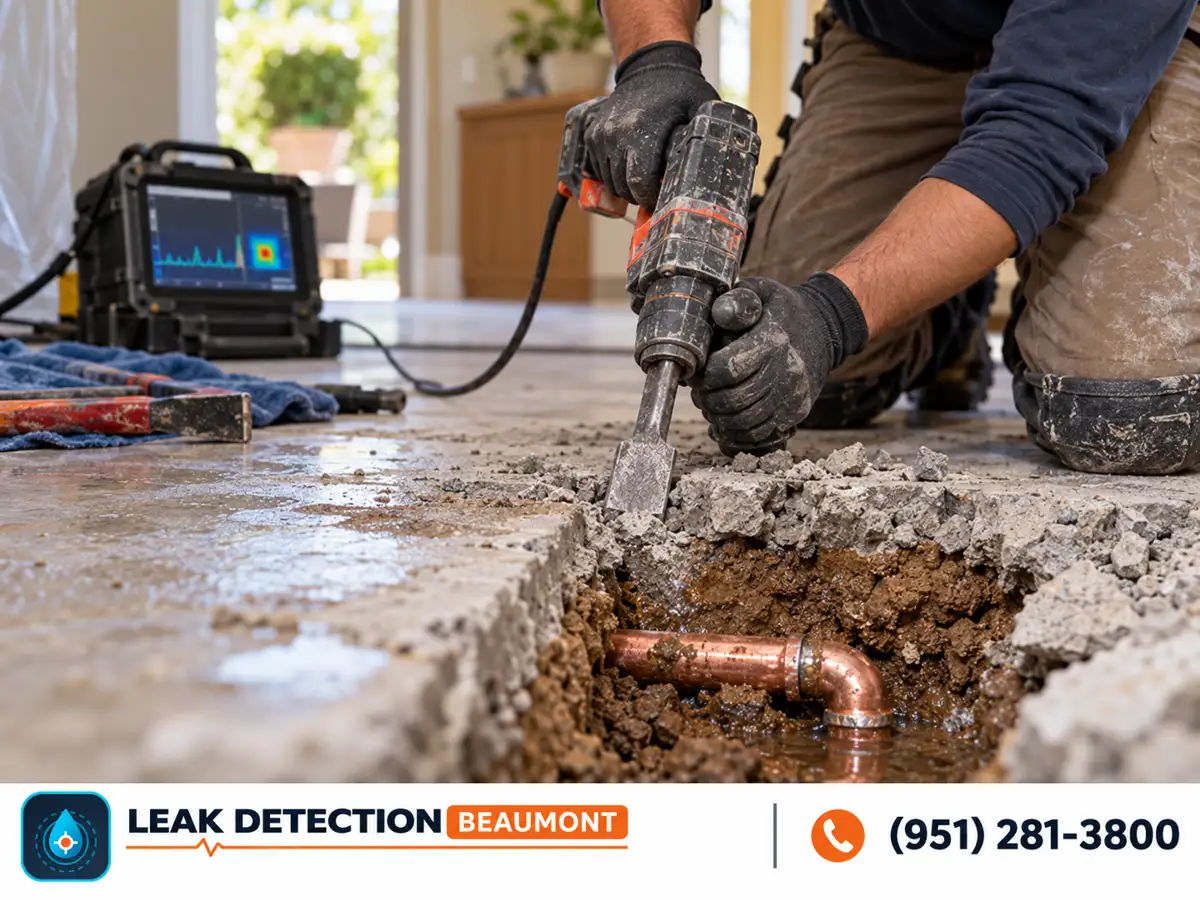
Slab Leak Repair Beaumont CA, Spot Fix or Reroute
Slab leak repair in Beaumont, CA fixes the broken pipe under your floor after it has been pinpointed. The two main options are a small direct opening at the marked spot to replace the bad section, or rerouting the line through walls or the attic. We price both before starting. Call (951) 281-3800.
If a detector has marked a leak under your floor, this page tells you what happens next. It is written for owners in Tournament Hills and Sundance who want to know how much floor comes up, how long it takes and who patches what.
What Slab Leak Repair Includes
A good repair is more than a new piece of pipe. It covers the opening, the new pipe, the test and the patch, and each one is explained before it starts, so the floor is not a surprise. Here is what the job covers from start to finish.
Review of the Marked Leak
We confirm the mark, check the pipe around it and decide whether the problem is one spot or a pattern.
A Small Slab Opening or a Reroute
Depending on the pipe, we either open a small area of the slab at the leak or run a new line around the problem.
Pipe Section Replacement
The damaged section is cut out and replaced with new pipe and quality fittings.
Pressure Test
Before anything is covered up, the line is pressure tested to prove the repair holds.
Concrete Patch and Flooring Plan
The opening is filled and finished. We discuss tile, hardwood, laminate or carpet so you know who handles each layer.
Why Slab Leak Repair Matters in Beaumont
Most Beaumont slab homes were built in the 2000s and later. A single leak on newer pipe is often a good fit for a spot repair, while repeat pinholes from hard water point to a reroute.
- Newer homes, one leak: A direct repair is often the simplest and least costly path.
- Repeat pinholes: Hard water wears copper from inside, so more leaks tend to follow on the same line.
- Sandy and fill soils: Soil movement can stress pipe under a slab over time.
- Fault exposure: The San Jacinto Fault is about 5 miles away, and shaking adds stress to old joints.
- Heat on hot lines: Water heaters push hot water through pipes under the slab, and heat speeds up wear at elbows and joints.
How the Slab Leak Repair Works Step by Step
Our five steps apply to slab repair too. The first three steps repeat what detection found, so nothing is guessed.
- Call and describe the problem: Tell us where the leak was marked and who found it. We confirm the details and give a price range for both methods.
- Inspect and test the property: We confirm the mark with a quick test and review the age and type of the surrounding pipe.
- Pinpoint the exact spot: We choose the method, protect floors and furniture and set the small opening or the reroute path.
- Review the report and quote: You get a written quote that shows the direct repair and the reroute side by side, with the time each takes.
- Repair and clean up: A licensed California plumbing contractor replaces the pipe, pressure tests it, patches the concrete and cleans up.
Slab Leak Problems We Repair
Slab leaks come in several forms, and the form decides the fix. A single pinhole in a straight run is a very different job from a line that has failed at several joints. We check the whole run before we cut, because a second leak found after the floor is patched costs far more than one found now. These are the ones we see most.
- A single pinhole: One small hole in a copper line is often a clean spot repair.
- Multiple slab leaks: Several leaks along one line suggest a reroute or repipe.
- Hot water line failures: Hot lines wear faster, so reroutes are common here.
- Leaks under kitchens and bathrooms: These need extra care to protect cabinets and fixtures.
- Jackhammer slab leak repair: Some jobs need a small opening cut with a saw and breaker, which we keep as small as possible.
What Slab Leak Repair Costs in Beaumont
National data from This Old House (2026) puts slab leak repair at an average of about $2,300, with most jobs between roughly $630 and $4,400. Full reroutes cost more, and Inland Empire labor runs higher, so we give a firm local number once the leak is marked.
| What Affects the Price | How It Changes the Number |
|---|---|
| Direct spot repair | Usually the lowest cost |
| Reroute through walls or attic | Higher cost but fewer repeat leaks |
| Depth and access | Harder access means more labor |
| Flooring type | Tile and hardwood cost more to patch |
| Number of leaks | Each extra leak adds time |
Direct Repair, Reroute or Epoxy Lining
The right method depends on pipe age, the number of leaks and what sits above the slab. A slab leak reroute vs repair choice is easier with the facts in front of you, and we show you the numbers side by side. Here are the four methods we use.
- Direct access: A small opening at the mark. Best for one leak on newer pipe.
- Reroute: A new line through walls or the attic. Best for hot lines and older copper.
- Slab leak epoxy lining: A coating inside the pipe, used only where the pipe suits it.
- Full repipe: New lines throughout. A sound choice when leaks keep coming back and several lines are aging.
Epoxy lining is not a fit for every pipe. It needs a straight, clean run, and it does not suit badly corroded copper. If lining does not suit your line, we say so and show the next best choice.
Insurance, Permits and Paperwork
Paperwork is part of a slab repair, and we handle what we can. Many policies help with the access and damage but not the pipe, so keep the report and photos. Call your insurer before the floor is opened if you plan to claim, since some insurers want to see the damage or send their own adjuster first. Here is what to know.
- Insurance: Share our leak report and photos with your insurer before work begins.
- Permits: Reroutes and repipes usually need a permit. We check and pull it.
- Flooring: We patch the concrete. Tile or wood replacement is usually handled by a flooring contractor, and we can coordinate.
Flooring After the Repair
The floor above the leak is the part owners worry about most. We patch and level the concrete so it is solid and flat, then hand the surface back ready for flooring. What happens next depends on what you have.
- Tile: A few tiles are lifted and reset or replaced. Keeping spare tile from the original install helps the match.
- Hardwood and laminate: Boards near the opening are replaced, and a flooring contractor blends the finish.
- Carpet: The carpet is pulled back and restretched or patched, which is usually the simplest case.
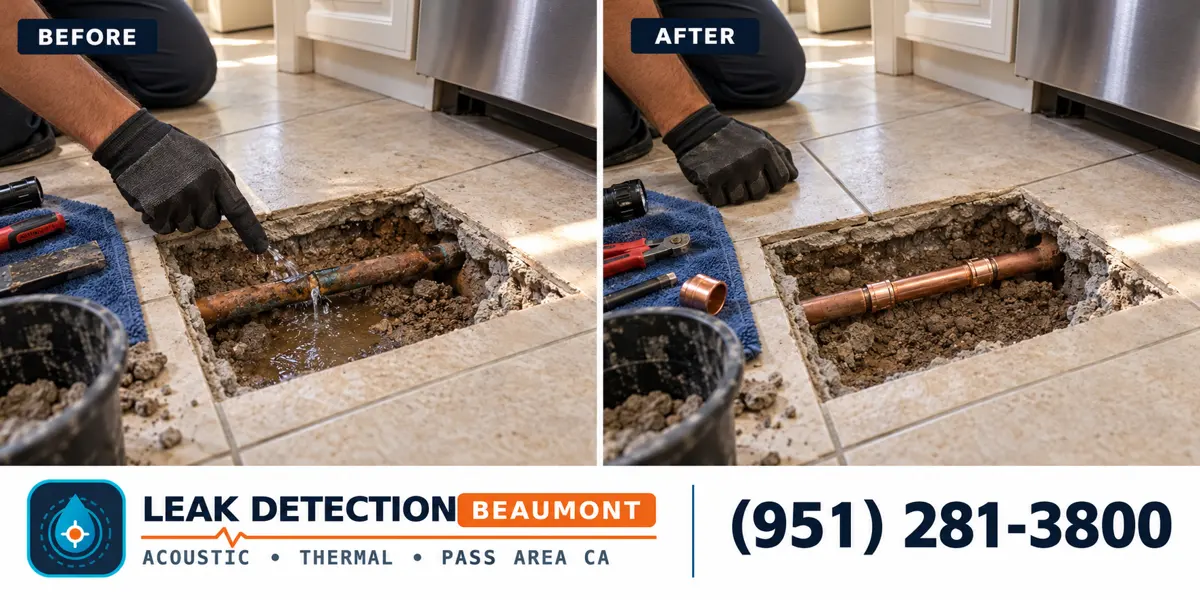
Slab Repairs, Before and After
The matched views below show the diagnostic area and targeted repair for Slab Leak Repair from the same angle.
Dust Barriers, Floor Protection and Same Day Water
Slab work can be messy, so we plan for it. Cutting concrete makes dust and noise, and we set up barriers, run a vacuum on the saw and keep the work area as small as the repair allows. Here is how we protect your home.
- Dust barriers up before cutting
- Floors and furniture protected
- Water restored the same day in most cases
- Concrete debris hauled away
Related Slab Services and Areas
Slab repair sits between detection and larger plumbing work. These are the closest matches.
- Slab Leak Detection: Finds and marks the leak before we cut.
- Pipe Rerouting: Moves the line out of the slab for good.
- Tournament Hills and Sundance: Slab homes in these neighborhoods often share the same layout and soils.
Connected resources and nearby coverage include leak detection in Beaumont CA, leak repair in Beaumont, and repiping your home.
Slab Leak Repair Questions
National 2026 data puts the average around $2,300, with most jobs between about $630 and $4,400. Inland Empire prices tend to be higher. Reroutes cost more but may prevent repeat leaks.
Many direct spot repairs are done in one day. Reroutes usually take one to two days depending on how many lines and how the house is built.
Many policies help with breaking into the slab and fixing water damage, but not replacing the pipe. Check your policy and share our report and photos with your insurer.